
Outdoor Safety & Dangerous Animal Risk Management in Africa for Companies, Universities & Field Teams
Preparing people to operate safely in Africa’s wildlife-rich and remote environments
Biodiversity & Environment Africa delivers outdoor safety and dangerous animal awareness training, wildlife risk assessments, and emergency response planning for companies, universities, and students operating across Africa. Our pre-departure preparation programs help organisations and educational institutions meet duty-of-care obligations, assess and reduce operational risk, and protect staff, researchers, and students working in high-risk outdoor environments.
Supporting mining, engineering, construction, telecoms, universities, academic researchers, students, healthcare, NGOs, and field operations across Africa
Why Outdoor Safety Matters for Companies, Universities, and Students in Africa
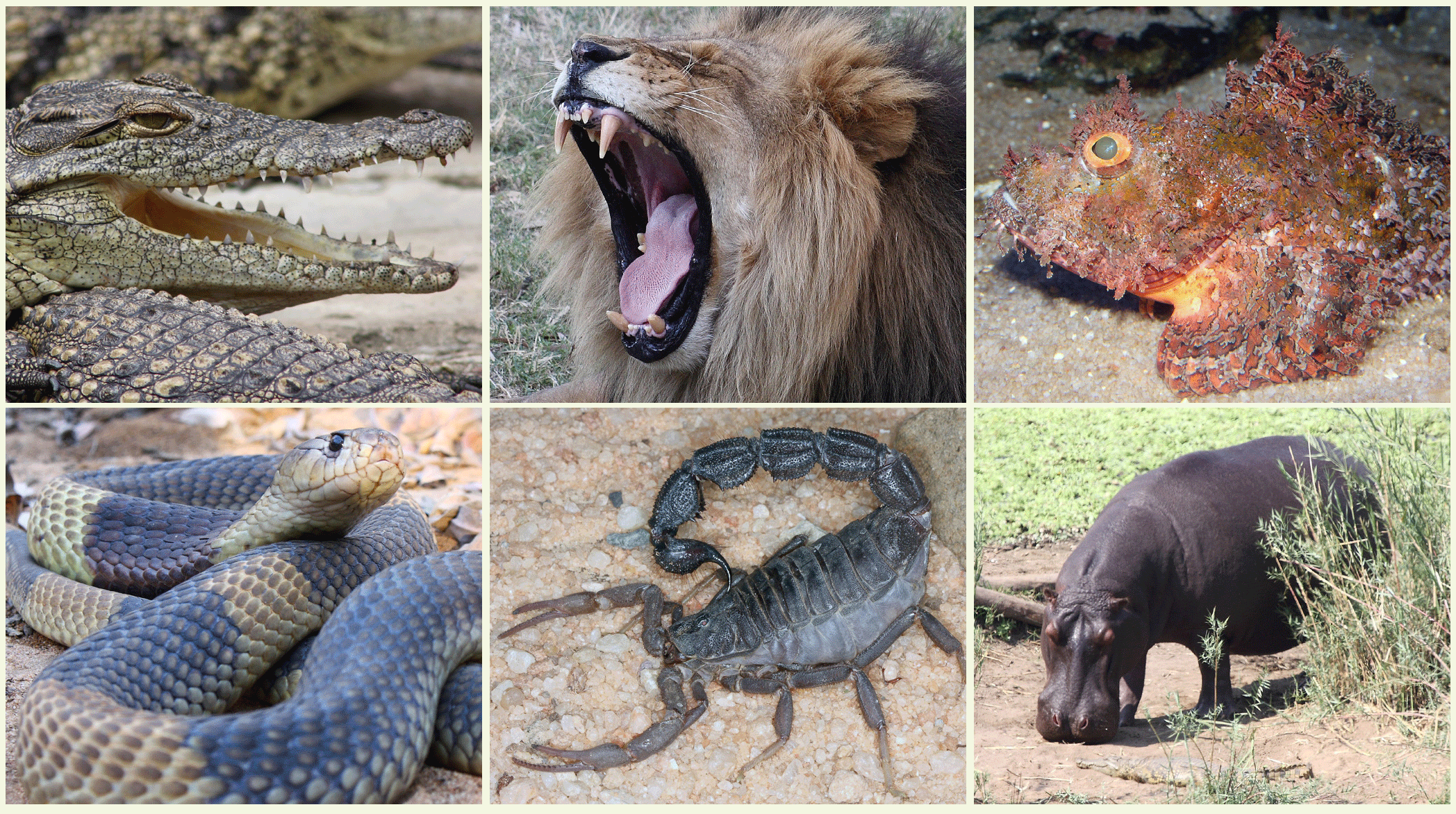
When organisations deploy teams, students, or researchers into Africa’s remote and wildlife-rich environments, exposure to dangerous animals and outdoor hazards becomes a critical operational risk. Elephants, hippos, crocodiles, big cats, venomous snakes, insects, extreme terrain, and limited emergency access can all present serious safety challenges if not properly managed.
Effective risk management goes beyond general travel advice. It depends on understanding animal behavior, environmental conditions, and real-world field scenarios—combined with clear safety protocols and emergency response planning.
Biodiversity & Environment Africa helps organisations, universities, and students identify, assess, and reduce wildlife-related and environmental risks before incidents occur. Our training and risk assessments support corporate and institutional duty-of-care obligations, help reduce liability, and enable staff, researchers, and students to operate safely and confidently in high-risk outdoor settings across Africa.
Who We Support Across Africa
Biodiversity & Environment Africa supports corporate, institutional, and field-based organizations operating in environments where dangerous animals, remote terrain, and limited emergency access present elevated safety risks.
We work with organizations whose teams operate outdoors, travel frequently, or conduct fieldwork in wildlife-rich regions across Africa, including:
Mining, energy, and extractive industries
Engineering, construction, and infrastructure projects
Land surveying and telecommunications teams
Corporate teams working in remote or high-risk outdoor locations
Medical, veterinary, and public health professionals
Universities, researchers, and field scientists
Non-governmental organizations (NGOs) and conservation groups
Our programs are designed for managers, safety officers, project leaders, and field teams who are responsible for employee safety, operational continuity, and compliance with international duty-of-care standards.
Dangerous Animals & Outdoor Hazards Training
Webinar / Seminar Modules:
Venomous Bites & Stings
Awareness Training around Dangerous Wildlife & Large Animals
Remote Worksite, Expedition & Field Safety
Risk Management & Deployment Readiness
Outdoor Emergency Response
Tropical Diseases
Where Knowledge & Awareness Meet Prevention
-
Yes. Even short-term deployments or rotating teams face wildlife and environmental risks. Pre-deployment training ensures staff are prepared from day one and reduces reliance on ad-hoc or informal safety practices.
-
Training helps organizations demonstrate proactive risk management, improve decision-making in the field, and reduce the likelihood of wildlife-related incidents. This supports legal compliance, insurance requirements, and corporate duty-of-care responsibilities.
-
Dangerous animal awareness training helps companies reduce incidents, protect employees, and meet duty-of-care obligations. Training prepares teams to recognize risks, avoid dangerous situations, and respond appropriately during wildlife encounters in remote or outdoor work environments.
-
Industries with outdoor operations or fieldwork benefit most, including mining, energy, construction, engineering, telecommunications, healthcare, research, and NGOs. Any organization deploying staff into wildlife-rich or remote African environments faces elevated safety risks.
-
Programs typically include dangerous animal awareness, environmental risk assessment, situational awareness, field safety protocols, emergency response planning, and incident prevention strategies tailored to specific locations and operational needs.
-
Teams operating outdoors in Africa may encounter crocodiles, elephants, hippos, big cats, venomous snakes and insects, and other wildlife. Risk levels vary by region, season, and activity. Understanding animal behavior and situational awareness is critical for preventing incidents.
Frequently Asked Questions:
Articles
Stay informed with expert articles on Africa’s dangerous wildlife, outdoor safety, biodiversity, conservation, and key environmental issues.
Join us on a journey of discovery as we explore the treasure trove of Africa’s rich biological diversity and natural heritage. Here we integrate all aspects of biodiversity into one holistic and interwoven fabric, from the smallest invertebrates to the enigmatic vertebrates —and botanical landscapes on which they depend.
Connecting people with nature
